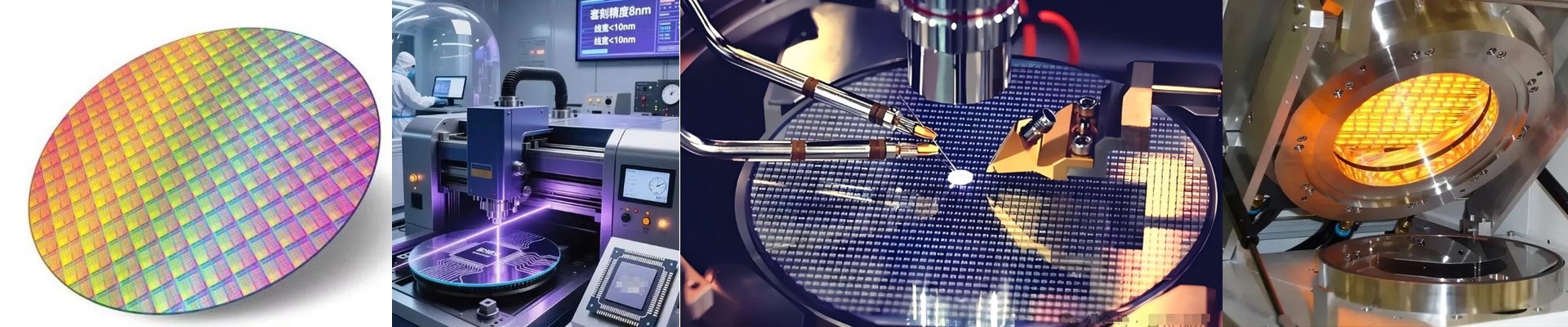
When you’re heating wafers in a chemical cleaning zone, you’re basically playing with fire—literally. You’ve got flammable, explosive vapors floating around, so you can’t just toss a bare quartz lamp over a chemical bath and hope for the best. That’s a recipe for a disaster. To keep things safe, we focus on two main things: giving the heat some breathing room and sealing everything tight. Handling the heat The distance between the lamp and the chemicals isn’t just a random number. It’s a hard boundary. Those IR lamps put out intense radiation, and if the lamp surface or the air around it gets too hot, those chemical fumes can ignite in a heartbeat. We do the math based on your lamp’s wattage and the vapor pressure of your specific chemicals. Sure, if you push the lamp closer, you’ll heat things up faster. But you also risk melting your housing. That’s why your cooling system has to be beefy enough to pull heat away from the lamp ends, otherwise, your seals are going to burn out. The seal Then there’s the encapsulation. We don’t just “cover” the lamp; we use specialized quartz-to-metal sealing and heavy-duty enclosures. The goal here is to keep the electrical guts away from the corrosive air. We wrap the electrodes and wiring in high-grade insulators that can handle the constant abuse from acidic vapors. It stops electrical arcing—which is basically a spark—and in an explosive environment, a single spark is all it takes. The trade-off Now, here’s the catch. Putting a protective layer between the IR source and the wafer means you lose a little bit of that raw heat. You might find you need to crank up the power or let the wafers sit a bit longer to hit your target temp. It’s a small price to pay to make sure the fab doesn’t blow up. We’ll take a slightly slower process over a chemical fire any day. You get a steady, reliable thermal profile, and more importantly, you get to go home at the end of the shift.