
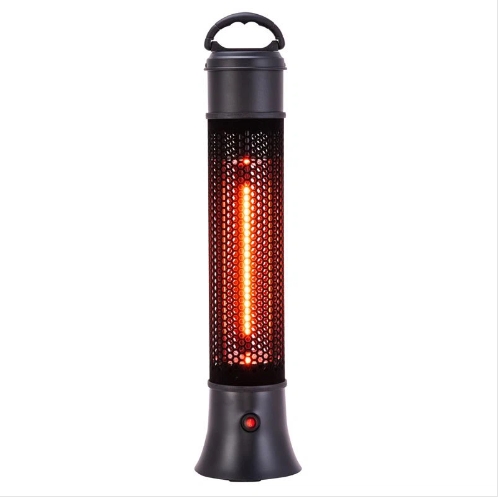
Keeping Bathroom Infrared Heaters Safe (and Dry)
Putting an infrared heater in a bathroom is a bit of a gamble if you aren’t careful. You’ve got steam, splashes, and constant humidity. In that kind of environment, electricity loves to find a way out of the wires and into places it shouldn’t be. To stop that from happening, we spend most of our time obsessing over where the heating element meets the chassis. That’s where the real battle is won.
Dealing with the Steam
Water vapor is sneaky. It gets into standard housings without any effort. To fight this, we use high-temp silicone seals and ceramic insulators at the lamp terminals. Why? Because of something called “tracking.” It’s basically when moisture creates a little bridge for the electricity to crawl across the insulation, which ends in a short circuit. By using materials that can actually push back against that current, we keep things safe even when the bathroom feels like a sauna.
The Safety Net
A “floating ground” is a disaster waiting to happen. We make sure the chassis has a rock-solid earth bond. Think of it as a fail-safe. If a quartz tube cracks or a wire gets frayed, we want the breaker to trip instantly. We don’t want the metal casing of the heater becoming live. But here’s the thing: the heater itself isn’t the only piece of the puzzle. You absolutely have to pair these with an RCD or GFCI. Without that fast-acting trip, you’re relying solely on the insulation, and in a wet zone, that’s just not enough.
The Trade-offs
We use quartz glass with special coatings to keep the heat high and the moisture out. Now, there’s a catch. These coatings protect the filament from corroding, but they add a tiny bit of thermal resistance. You might notice the heater takes a second longer to reach full blast compared to a bare tube. It’s a fair trade. I’d much rather wait an extra few seconds for warmth than have the whole element burn out because of a little dampness. One last tip: don’t cheap out on the cables. Use heat-resistant, moisture-proof wiring. Standard PVC is great for a living room, but in a bathroom, it’ll crack and degrade under the stress of the steam. Once that happens, your insulation is gone.