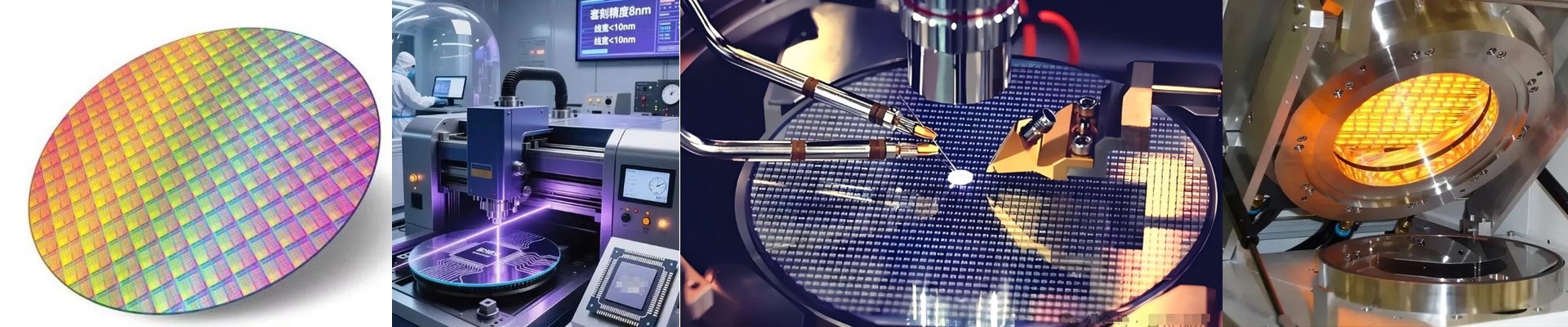
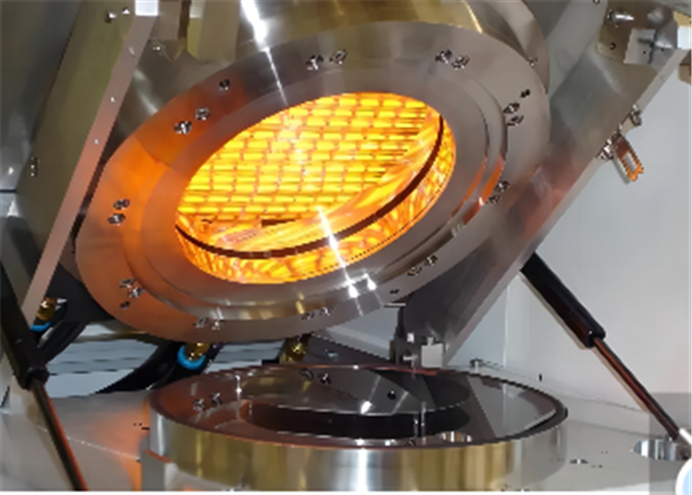
On the lithography floor, you know how it goes: a half-degree drift in the soft-bake profile and your critical dimension starts walking off by nanometers. One bad lot and you’re paying for it for days. We built this Photoresist baking lamp for that reality—no hand-waving, just control you can bank on. What matters under the hood We run a short-wave halogen emitter in a quartz envelope, tuned to heat the photoresist layer fast and keep it stable. Across the bake surface, wafer-level uniformity holds within ±0.1°C, and run-to-run repeatability comes in better than ±0.2°C. Setpoint capture is under 2 seconds, and once you’re thermally soaked, drift stays below 0.1°C per hour. The assembly is cleanroom-compatible for Class 1–100, and it’s engineered to generate essentially zero particles during operation. Power and footprint are specced to drop straight into existing coat/bake tracks, and the interface lines up with standard tool connectors so a retrofit is straightforward. Why this keeps you out of trouble This lamp keeps your photoresist process discipline where it needs to be. Soft bake and hard bake profiles stay locked, so line width, sidewall angle, and residual solvent stay in spec. That means fewer rework lots, less scrap, and a cycle time you can plan around. Fast settling with minimal overshoot keeps energy use down, and the emitter’s long life stretches maintenance intervals—fewer spares, less unplanned downtime. What to plan for on install You’ll need cleanroom-rated electrical provision and careful optical alignment so the thermal footprint stays exactly where it should—on the wafer. Closed-loop control also requires an external temperature sensor at the bake plate; without it, you’re flying open-loop on setpoint. Run a short qualification to map your actual thermal budget, then lock the recipe and move on.